
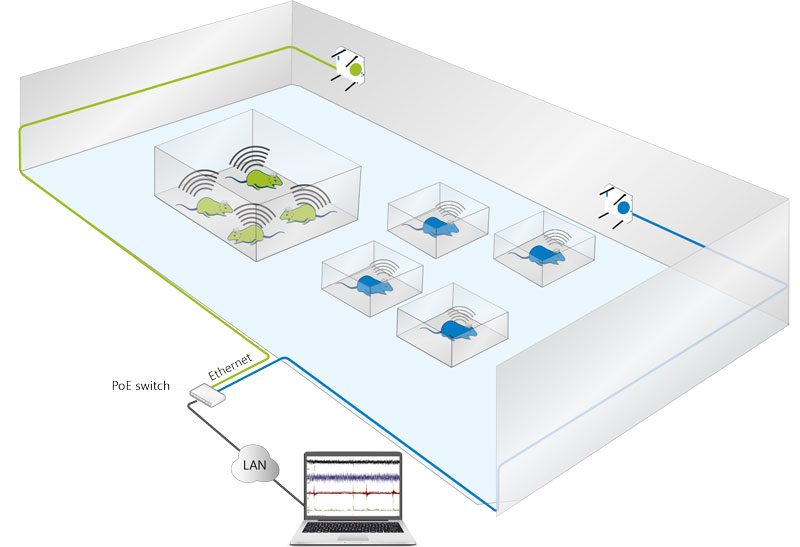
easyTEL+ RP removable telemeters are attached to a head connector or housed in a jacket (rodent) or a cap (large animals) during recording sessions, while physiological signals are radio-transmitted to a receiver within 3 to 5 meters distance.

EEG acquisition is performed without the use of tethering cables.
In large animals, non-invasive options utilize your choice of electrode type (i.e. surface, needle, etc.) secured in place using headgear (i.e. custom cap, vet wrap, etc.).
In rodents, a head connector is implanted in the skull and acts as an interface between the electrodes in the brain and the transmitter. The easyTEL+ RP telemeter may be plugged into and removed from the head connector as required. In this way, the same transmitter is usable on any subject equipped with a connector.
With a transmitter battery powered and equipped with short leads length, easyTEL+ RP provides a high signal-to-noise ratio and permits clean data collection.
The EEG signal is retrieved through surgically implanted electrodes in the cortex, the hippocampus or any other area of the brain. Each signal requires 2 measuring electrodes (positive and negative) and a reference, which is common to all biopotential signals.
Up to 4 bipolar biopotentials can be recorded with easyTEL+ RP. Adjustable settings allow to mix EEG with ECG and/or intramuscular EMG.
Did you know?
easyTEL+ RP can be used for unipolar biopotential acquisition, on special request.
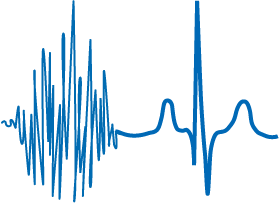
ECG and EMG acquisition are only possible in rodents.
Adjustable settings allow to mix EEG with ECG and/or intramuscular EMG, in the head-mounted configuration.
External adhesive ECG electrodes can be used when the telemeter is worn in a jacket.
ECG signal: wave duration, amplitude, ST elevation, QT correction, arrythmia detection, HRV analysis.
EMG: Temporal and spectral analysis
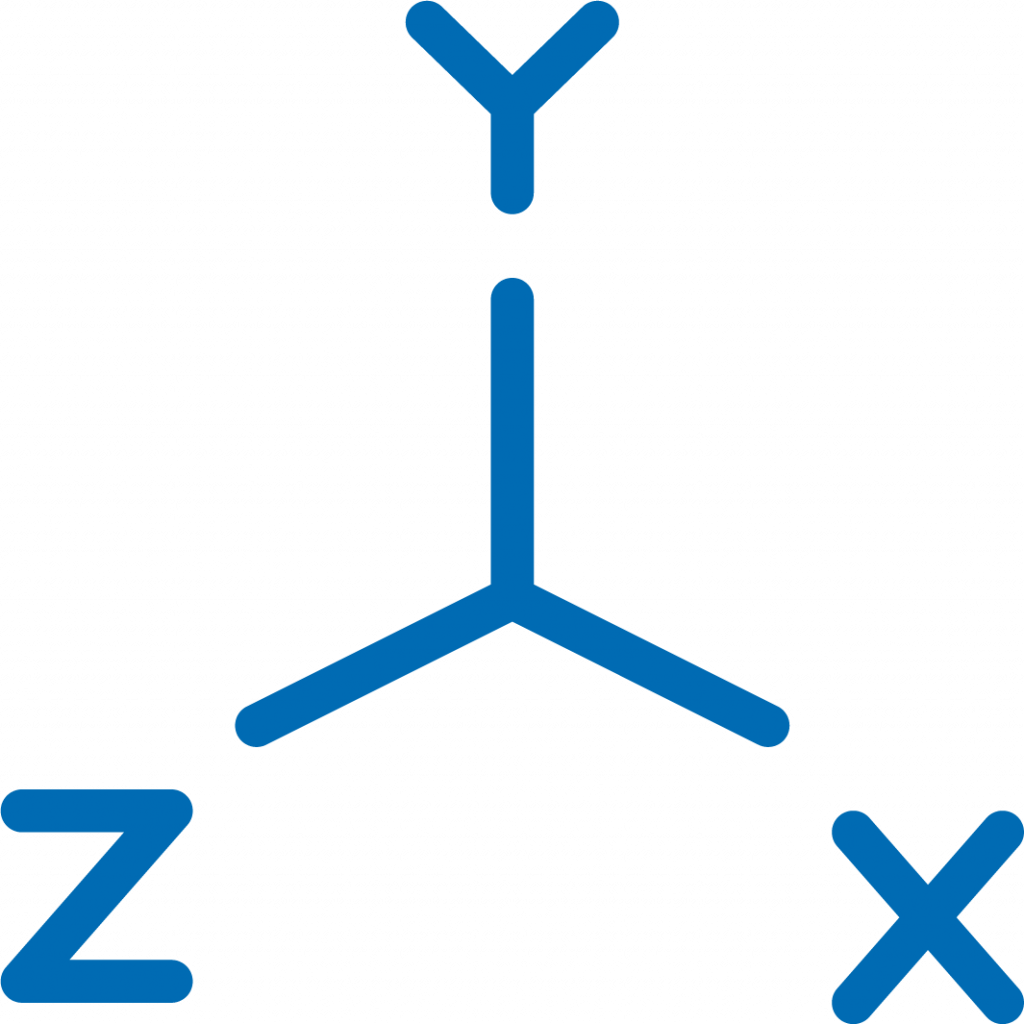
A 3-axis accelerometer inside the reasyTEL+ RP telemeter measures the acceleration in the x-, y- and z-axis.
Any movement of the subject head translates in variations in the x, y, z coordinates of acceleration.
Using the three individual axis signals, IOX2 acquisition software calculates a global acceleration, making it possible to derive information about the animal’s posture (standing on hind legs, on its side etc).
