
February, 2026

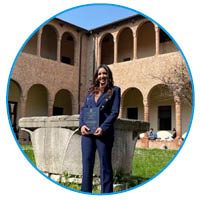
Dr Sabrine Bilel is a Research Scientist at the Department of Environmental and Prevention Sciences, University of Ferrara, Italy. She holds a PhD in Advanced Therapies and Experimental Pharmacology. Her research focuses on the pharmaco-toxicological characterization of novel psychoactive substances (NPS). She has been using the ecgTUNNEL since 2020 for in vivo studies of NPS.
I am primarily conducting research in the pharmaco-toxicological characterization of novel psychoactive substances (NPS), with a particular focus on novel synthetic opioids (NSOs) and their effects in vitro and in vivo. My work involves studying the pharmacodynamic and toxicological profiles of emerging NPS, including synthetic opioids and other related compounds, using a variety of experimental approaches to understand their behavioral, physiological, and receptor-mediated effects, as well as responses to potential interventions such as naloxone.
My research aims to fill gaps in knowledge about adverse clinical effects and public health risks associated with these substances.
The field of research on novel psychoactive substances (NPS), and especially synthetic opioids, is rapidly evolving and highly dynamic. New compounds continue to emerge at an unprecedented pace, driven by illicit synthesis and attempts to circumvent regulatory controls. This creates significant scientific and public health challenges, as many of these substances have potent pharmacological effects, poorly understood toxicological profiles, and limited or no clinical data.
The real-world implications of my research are closely linked to public health, clinical practice, and drug policy. The pharmacological and toxicological characterization of novel psychoactive substances (NPS) helps elucidate their mechanisms of action and clarify the health risks associated with compounds that are already circulating, often mislabeled, on the illicit market.
The selection of the animal model was guided by the need to obtain reliable and translational data on the pharmacological and toxicological effects of novel psychoactive substances. Rodent models are well established in neuropharmacology and toxicology. In particular, the mouse model that I have been using for my research field allows controlled investigation of dose–response relationships, behavioral alterations induced by different classes of NPS, and physiological impairments, including cardiorespiratory dysfunction, as well as receptor-mediated mechanisms.
emka TECHNOLOGIES adds significant value to my research by providing reliable, high-quality physiological monitoring tools that allow the comprehensive in vivo assessment of novel psychoactive substances.
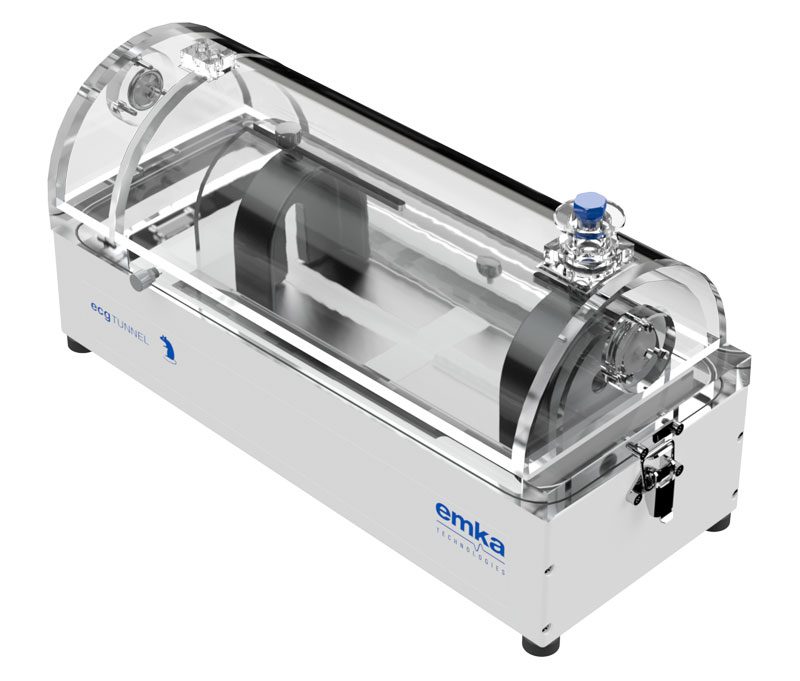
Their solutions enable the simultaneous monitoring of both ECG and plethysmography in mice. A particularly valuable feature is the ecgTUNNEL, which allows non-invasive, repeatable measurements under minimally stressful conditions for the animals. The robustness of the system and the ease of data acquisition and analysis greatly enhance experimental efficiency and reproducibility.
The next phase for our lab is to expand the characterization of emerging novel psychoactive substances, that are increasingly appearing on the illicit market. We aim to combine in vivo, in vitro, and computational approaches to better understand their pharmacological mechanisms, toxicological profiles, and potential interactions with clinically used medications.
The development of advanced research instruments, such as longer monitoring through implantable ECG and combined plethysmography from emka TECHNOLOGIES, is crucial for deepening our understanding of the physiological and behavioral effects of these emerging NPS.
My advice would be to stay curious, interdisciplinary, and adaptable. This is a fast-moving area where new compounds and challenges emerge continuously, so it is essential to combine knowledge from pharmacology, toxicology, analytical chemistry, and neuroscience. I would also emphasize the importance of rigorous experimental design and ethical practices, particularly when working with in vivo models, to generate reliable, reproducible, and translational data.
THANK YOU, Dr. BILEL, FOR THIS INTERVIEW!