
This page lists techniques and measurements employed by
the isolatedHEART perfusion system.
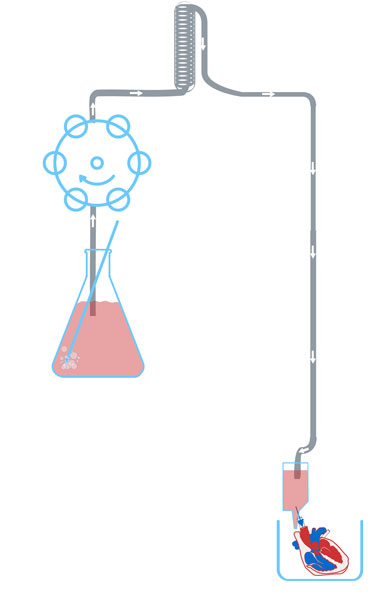
In the Langendorff heart perfusion mode, the perfusate is pumped through the aorta towards the heart. Because of this retrograde perfusion, the liquid does not enter the left ventricle but is diverted into the coronary arteries. This mode, which is easier to implement, enables the study of heart contraction, heart rate and vascular reactivity. It is ideal for investigating intraventricular pressure, cardiac contractility and relaxation, electrical conduction and coronary flow.
The first isolated perfused heart system was developed by Carl Ludwig and Elias Cyon in 1866 using a frog heart preparation
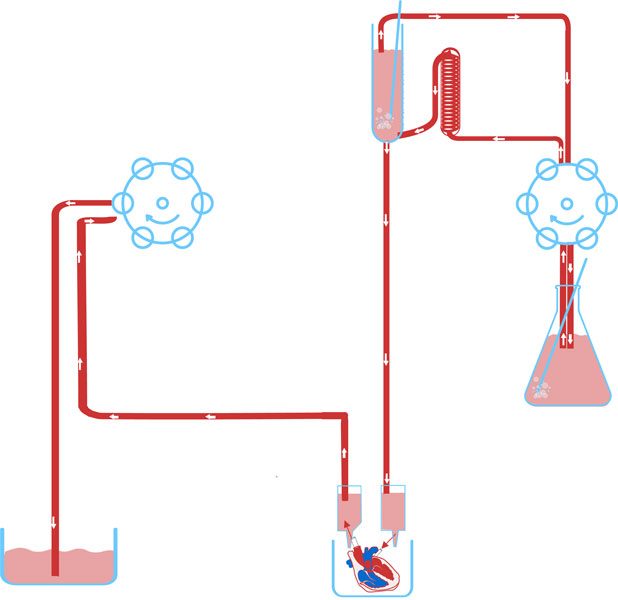
In the working heart perfusion mode, the flow of perfusate mimics the flow of blood in situ. The perfusate enters the left atrium via the pulmonary vein and is pumped into the left ventricle then ejected into the aorta, against a resistance that mimics the global resistance of the body (afterload).
As the name implies, this technique allows the heart to perform its physiological pumping action, i.e. it performs pressure/volume work. Therefore, it provides a complete analysis of heart function and can be used to study cardiac metabolism, long-term pathology or ischemia-reperfusion.
