This page lists techniques and measurements employed by the easyTEL+ system for rodents, and used in the area of measuring cardiovascular, neurological and respiratory outcomes.
Physiological measurements are captured, amplified and digitized by a transmitter surgically implanted and wirelessly transmitted to a receiver within 3 to 5 meters distance.
When received by the telemetry receiver, physiological signals can directly be sent to the acquisition computer, via Ethernet.
Communication between implants and receivers is bidirectional, allowing data collections, but also implant remote control (implant state (on/off), settings and configuration).
Did you know?
Telemetry technique ensures no cross talk between transmitters, allowing animals to be group-housed in the same room or cage.
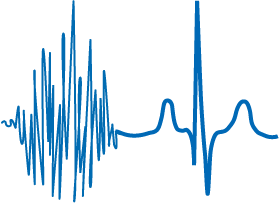
Electrocardiogram (ECG), electroencephalogram (EEG), electromyogram (EMG) or electrooculogram (EOG) signals can be retrieved using digital telemetry easyTEL+ through implanted electrodes. Various configurations are available:
Single lead biopotential, using a 2-wire electrode: To get 1-lead ECG, or 1 EEG, EOG or EMG. For ECG, Lead II placement is usually chosen (but not necessarily).
Dual biopotential: To get a 2-lead ECG or a combination of 2 biopotentials amongst 1-lead ECG, EEG, EOG or EMG.
Unipolar configuration, using 3 wires electrode: In this configuration, the reference electrode is common to both biopotentials. Unipolar biopotential is easier for the surgery but both biopotentials must be similar (2 EEG or 2 ECG for instance).
Biop 1 = Electrode 1 – Electrode 2
Biop 2 = Electrode 3 – Electrode 2
Bipolar configuration, using 4 wires electrodes: In this configuration, the biopotential is measured between the positive (red) and negative (white) electrode, allowing to get two independent biopotentials (EEG and EMG for instance).
Biop 1 = Electrode 1- Electrode 2
Biop 2 = Electrode 3- Electrode 4 For ECG, lead III can be deduced by the software from leads I and II.
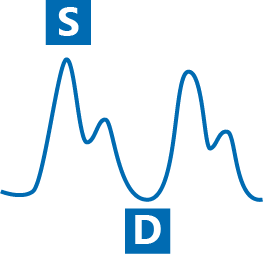
Blood pressure can be monitored directly and continuously in conscious, freely moving animals, over an extended period.
Implants are equipped with a miniature catheter designed to be surgically inserted into a suitable artery (aorta, carotid, femoral, pulmonary) or directly in the Heart (Left and Right ventricles and/or right atrium).
Outcomes
• Systolic
• Diastolic
• Heart Rate
• Mean pressure
• Duration of breath
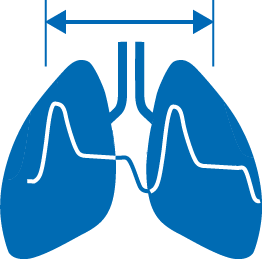
Intrapleural implantation of telemetry pressure probes was found to be a reliable modality to monitor changes in breathing rate and general breathing mechanics, as shown in this poster:
Breathing rate can be retrieved from easyTEL+ implants through:
• Blood pressure low frequency variations • Pleural pressure frequency • Diaphragmatic EMG low frequency variations
Acceleration
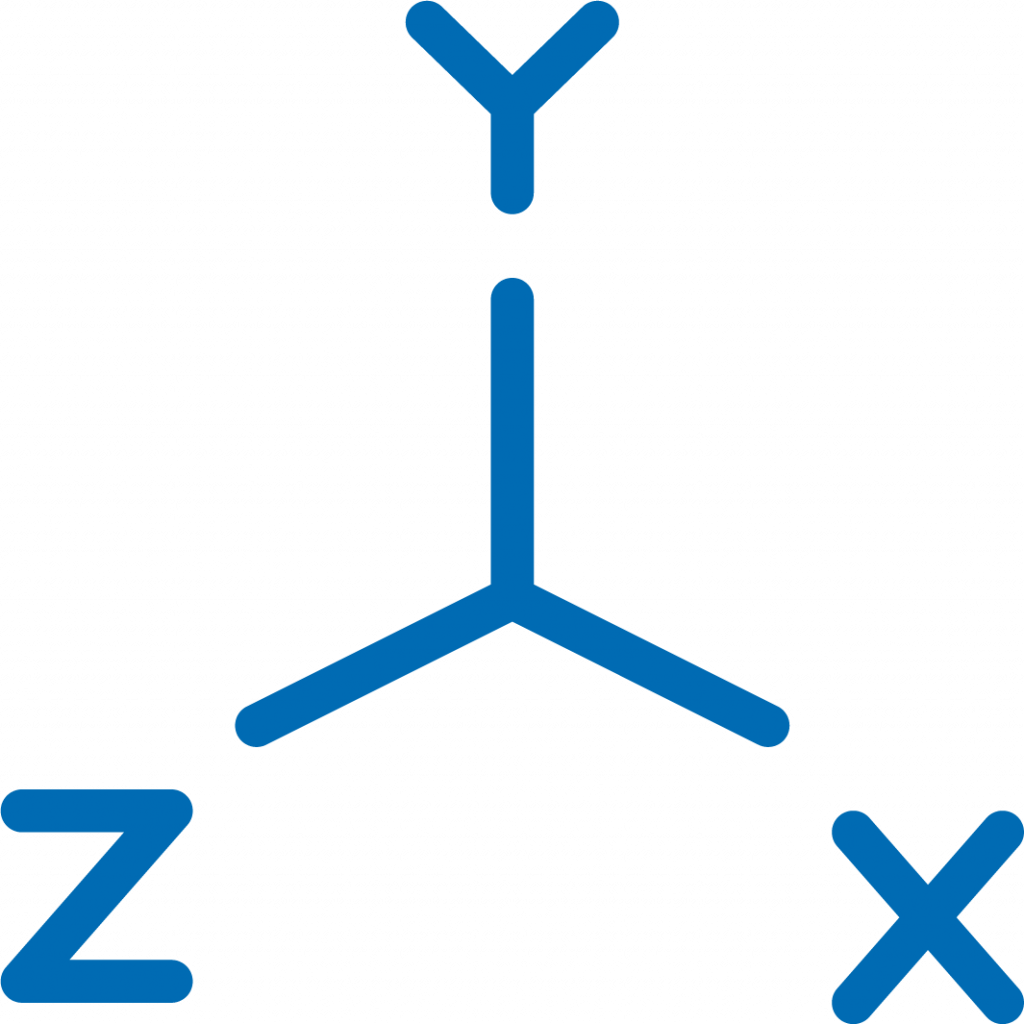
A 3-axis accelerometer inside the implant measures the acceleration in the x-, y- and z-axis.
Any movement of the subject head translates in variations in the x, y, z coordinates of acceleration.
Using the three individual axis signals, IOX2 acquisition software calculates a global acceleration, making it possible to derive information about the animal’s posture (standing on hind legs, on its side etc).
Temperature
The easyTEL+ implant houses a cutting-edge sensor that continuously monitors core body temperature with a resolution of 0.04°C.