
Assessing the safety of warfare nerve agents antidotes using dual-chamber plethysmography

Despites international treaties, the usage of chemical weapons is still a concern nowadays. This article highlights a study using Dual-chamber plethysmography for the determination of the NOAEL dose of an oxime, for the treatment of organophosphorus-nerve agents poisoning.
Evaluating large Animal models of Heart Failure with hFpEF using clinical scores

Learn about Heart Failure with Preserved Ejection Fraction and the development of large animal models for studying and testing therapies for this complex condition.
Rats for cardiovascular research

Because of the multifactorial nature of cardiovascular diseases, there is not a single specie which is optimal for all studies. The choice of an animal model should be carefully made as it can affect the experimental outcomes and the reasonable translation of study findings to humans.
Cancer and Chemotherapy-induced Cardiotoxicity

To develop safe and effective cancer therapies, it is crucial to understand chemotherapy-induced cardiotoxicity and cancer‐related cardiac complications. This blog highlights recent discoveries in this field.
Cell-based & cell-free therapies for myocardial infarction

After myocardial infarction, the heart fails to regenerate and ischemic/reperfusion injury leads to cardiomyocyte loss and fibrosis leading to impaired heart function. The medical treatment for heart failure, for the most part, is not disease modifying, it’s simply symptomatic. Another strategy is to address the fundamental issue of a failing heart, which is the loss of cardiomyocytes after a heart attack.
Maximizing Insights from Preclinical Safety Studies in the context of rising costs and shortages

During the 2023 Safety Pharmacology Society (SPS) Conference in Brussels, scientists from leading preclinical contract organizations (CROs) discussed how traditional IND-enabling studies involving primates and dogs can be complemented (and sometimes even replaced) by alternative models such as mice, rats, rabbits and pigs.
Using super-intervals to enhance statistical sensitivity of cardiovascular parameters detection

The use of “super-intervals” improves statistical sensitivity to detect QTc interval prolongation and thus allows to get more robust QTc datasets with reduced signal variability.
The Power of Combining Telemetry and Plethysmography: Insight Into the Control of Breathing
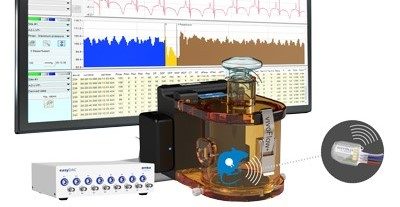
Combining implantable telemetry with whole body plethysmography offers a powerful approach that provides researchers with an in-depth understanding of respiratory patterns and mechanisms.
The Role of Chx10 Neurons in Global Motor Arrest

In the intricate web of neural circuits that guide our every move, a recent study has shed light on a fascinating phenomenon: the arrest of ongoing movements.
e-cigarettes induce cardiac arrhythmia and conduction defects in mice

In recent years, electronic cigarettes have become rapidly popular worldwide, despite growing evidence that they adversely impact cardiopulmonary health.
Further scientific evidence is needed to clarify the risks of e-cigarettes and guide the use and regulation of these nicotine aerosol delivery devices.
