
Heart Rate Variability: Part 2 – Configuring FFT Sampling parameters
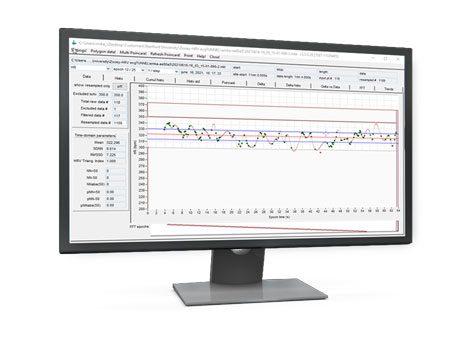
This document discusses the proper usage of the Fast Fourier Transform (FFT) Analysis Parameters, using the Heart Rate Variability (HRV) Analysis Module in ecgAUTO.
Heart Rate Variability: Part 3 – FFT windows
This Technical Note compares four different windowing approaches available in ecgAUTO, for The Heart Rate Variability (HRV) detection.
Vascular reactivity using tissue bath systems

This application note includes a protocol explaining how to set an experiment to study rodents aorta rings on tissue bath.
Guidelines for external ECG recording on laboratory animals.
This document provides recommendations for proper subject preparation, ECG lead positioning and equipment configuration during in vivo cardiovascular electrophysiology studies.
Cardiotoxicity

Cardiotoxicity studies Cardiotoxicity refers to damage or dysfunction of the heart caused by exposure to drugs, environmental pollutants, or other toxic agents. It is a critical concern in drug development and environmental health, often leading to heart failure, arrhythmias, and electrophysiological abnormalities. Functional cardiovascular outcomes such as electrocardiograms (ECGs), blood pressure, and other hemodynamic endpoints can offer powerful insights […]
Vascular Biology

Vascular Biology Vascular biology implies understanding mechanisms involved in vascular tone, hemostasis, thrombosis and pathobiology of ischemic syndrome, remodeling, and plaque formation. It involves functional assessment of endothelial and smooth muscle cells in the vascular system. The major regulator of vascular homeostasis is the endothelium, which is a thin layer of cells that line the […]
Heart failure & cardiac model development

Heart failure & cardiac model development Heart failure occurs when the heart cannot pump enough blood to meet the body’s demands. This decline in contractile function is caused by a variety of conditions but mainly following myocardial infarction, when blood flow to the heart is reduced. ECG, Blood pressure and Blood flow investigation The investigation […]
Arrhythmia
Arrhythmia Cardiac arrhythmias, also known as Heart arrhythmia, dysrhythmia, or irregular heartbeat, are disorder where the heart beats with an irregular rhythm, due to a change in the electrical impulses to the heart. These changes affect the heart’s ability to pump blood effectively, leading to other organs (i.e. lungs) becoming damaged. Understanding arrhythmia mechanisms and […]
Pulmonary hypertension

Pulmonary Hypertension Pulmonary hypertension (PH) is a condition characterized by elevated blood pressure in the arteries of the lungs, often leading to heart failure if left untreated. Preclinical research on PH involves various approaches to understand its pathophysiology and develop potential treatments. Animal models, particularly rodents and larger mammals, are commonly used to mimic PH […]
