
easyTEL+ large animals – Specifications
Specifications easyTEL+ for large animals system consists of implants, receivers, an ethernet switch and an acquisition computer. Detailed specifications of the easyTEL+ system capabilities are provided in the tables below. For a customized quotation that meets your research needs, please contact emka TECHNOLOGIES Customer Service. Implants Specifications easyTEL biopotential Pressure Temperature Activity Battery life* (days) […]
emkaPACK – Benefits
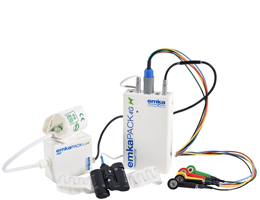
Benefits With its simple design, the emkaPACK5 is modular, simple and easy to use. Modular The emkaPACK5 external transmitter acquires up to 9-lead ECG, respiratory endpoints(1 or 2 RIP* belts), blood pressure**, skin temperature, and postural activity data. When combined with easyTEL+ implants, it can acquire invasive endpoints, such as EEG,EMG, ECG, pressure (arterial and […]
Seizure & epilepsy
Seizure & epilepsy Seizure is a disorder of the nervous system, thought to be the result of faulty electrical activity in the brain which can lead to changes in behavior, movement, feelings, and/or levels of consciousness. Epilepsy studies involve seizure detection from EEG traces, however other parameters can be of interest, such as ECG, EMG […]
Optogenetics
Optogenetics Optogenetics is a revolutionary biological technique that uses light to control and study neural pathways by activating light-sensitive proteins. This powerful method is widely applied in neuroscience to control real-time neuronal activity and investigate brain functions. Optogenetics holds significant promise in developing therapies for neurological disorders such as Parkinson’s disease, epilepsy, and depression, by […]
Parkinson’s Disease

Parkinson’s Disease Parkinson’s disease (PD) is a neurodegenerative condition that primarily affects movement control. It occurs with neurodegeneration in the dopaminergic pathways of the brain, particularly in the basal ganglia and motor cortex. Researchers rely on various animal models to study Parkinson’s disease, which are essential for testing new treatments and understanding the progression of […]
Rett Syndrome
Rett Syndrome Rett syndrome (RTT) is a severe neurodevelopmental disorder caused by mutations in the MECP2 gene, leading to various symptoms, including cognitive impairment, motor dysfunction, and significant respiratory abnormalities. The disease is hallmarked by repetitive movements and general developmental regression, however cause of death is often due epileptic or respiratory crises. Integrating vivoFlow plethysmography […]
Alzheimer’s Disease
Alzheimer’s Disease Alzheimer’s Disease is a progressive neurodegenerative disorder that primarily affects memory, cognition, and behavior. Key pathological features include the accumulation of amyloid plaques and tau tangles in the brain, which disrupt neural communication and cognitive functions. Understanding Alzheimer’s disease (AD) through preclinical studies is crucial for developing effective treatments. At emka TECHNOLOGIES, our […]
Addiction Research
Addiction Research Preclinical addiction research aim to uncover the complex interplay of brain mechanisms, genetic factors, and environmental influences that drive addiction. A range of preclinical animal models (rodents, non-human primates) are used to study addiction-like behaviors, such as drug self-administration, conditioned place preference, and withdrawal responses. These models help in simulating aspects of human […]
Fear & Extinction Learning Studies
Fear & Extinction Learning Studies Fear learning is a process where individuals associate a neutral stimulus (like a tone or light) with an aversive event (like a mild shock or unpleasant noise). This creates a fear response whenever the neutral stimulus is presented. Extinction learning happens when the fear-evoking stimulus is repeatedly presented without the […]
Control of breathing

Control of Breathing Respiration functions through a complex network of neural controls and feedback mechanisms as the body constantly adjusts its breathing rate and tidal volume to meet respiratory metabolic demands. Several diseases and conditions disrupt the neurological and muscular signals, compromising the body’s ability to breathe normally. Neurologic and muscular disorders like Duchenne muscular […]
